EV Charging at Home: How to Future-Proof Your Garage the Right Way
If you’ve got an EV — or you’re even thinking about buying one — this is something you should be planning for now.
Home EV charging isn’t just a nice upgrade anymore. It’s quickly becoming a must-have feature. Whether it’s for you or the next homeowner, having your garage set up correctly makes your home more functional, more efficient, and more valuable.
Let’s walk through what matters, what to watch out for, and how to do it right.
Why a Home Charging System Matters
You technically can plug an electric vehicle into a regular 110–120V outlet. That’s Level 1 charging.
But here’s what that gets you:
-
About 3–5 miles of range per hour
-
Slow charging
-
Fine for very light use or emergencies
For most people, that’s not practical long-term.
The real solution is Level 2 charging, which runs on 220–240 volts.
With Level 2, you’re looking at:
-
Roughly 20–30 miles of range per hour
-
Full overnight charging
-
No more waiting at public chargers
-
No guessing whether a station is free or functioning
You plug in at home at night. You wake up with a full battery. Done.
Convenience alone makes it worth considering — but there’s more to it than that.
It Adds Real Value to Your Home
As EV ownership increases, buyers are starting to ask a very simple question when shopping for a house:
“Does it already have EV charging?”
If it’s between two comparable homes — one EV-ready and one not — guess which one wins?
Homes with built-in charging infrastructure are:
-
More attractive to EV owners
-
Easier to sell
-
Potentially able to command higher offers
-
Seen as “future-ready”
Even buyers who don’t currently own an EV may see it as a forward-thinking upgrade. It’s becoming part of the checklist, just like updated kitchens or energy-efficient windows.
What’s Trending in 2026?
The residential EV charging market is booming — and it’s not slowing down.
Here’s what we’re seeing:
1. Smart Chargers
Most modern chargers now include:
-
Wi-Fi connectivity
-
Timer functions
-
Load balancing
-
Utility rate scheduling
-
Solar integration
You can program charging to avoid peak electricity rates and monitor usage right from your phone.
2. Solar + EV Integration
More homeowners are pairing EV chargers with solar systems.
Charge your car with energy you generate at home? That’s a powerful combination.
3. Built-In from the Start
New construction and major remodels are increasingly including:
-
EV-ready wiring
-
Dedicated circuits
-
Sometimes the full charging station installed
Even if the homeowner doesn’t yet own an EV, the infrastructure is there.
4. Better Design
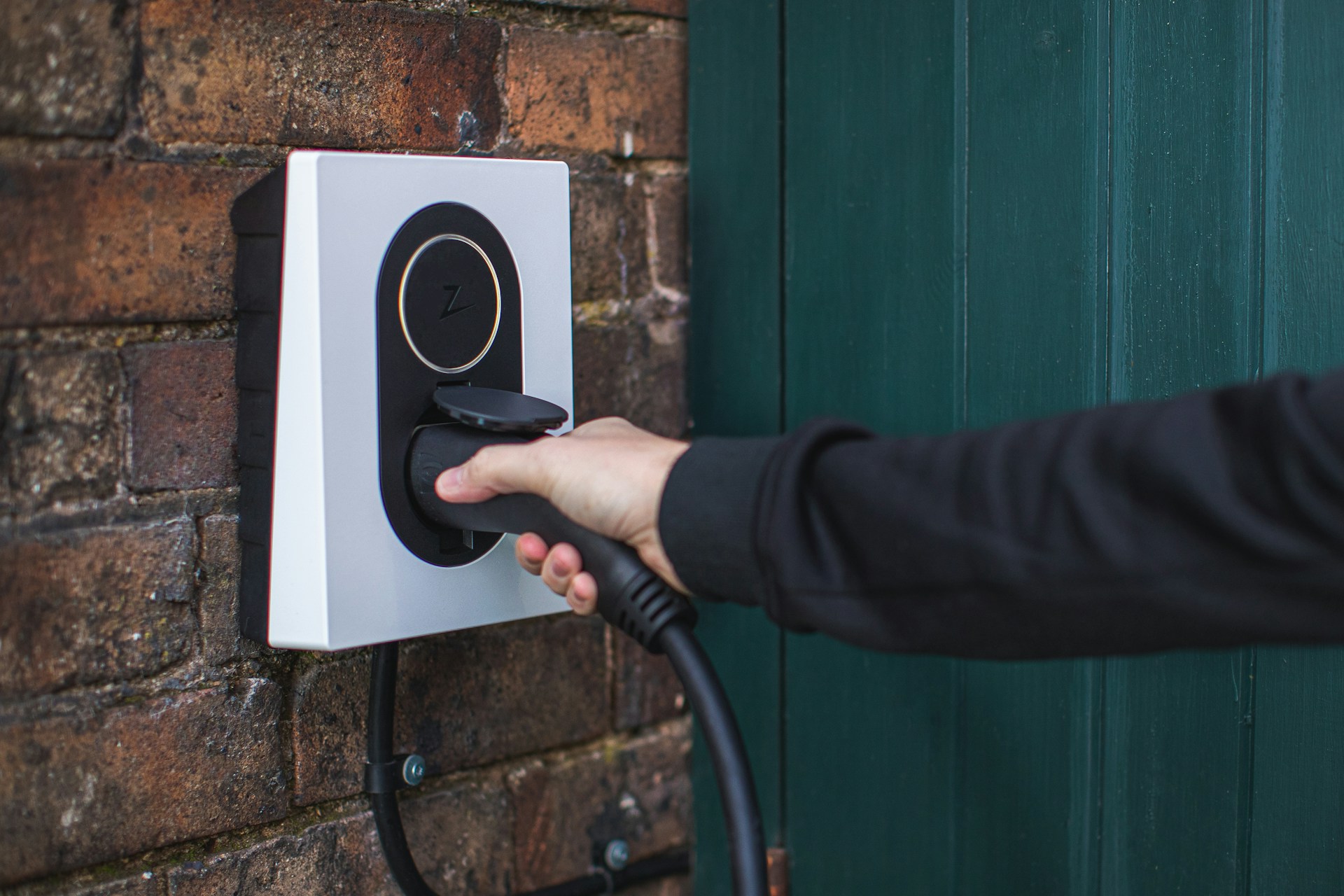
The clunky industrial boxes mounted randomly on garage walls are disappearing.
Modern chargers are:
-
Sleek
-
Minimal
-
Designed to complement the space
-
Available in cleaner finishes
Yes — garage aesthetics matter now.
What Installation Actually Involves
So how big of a deal is it to install a home charger?
It depends — but here’s what’s typically involved.
1. Check Your Electrical Panel
This is the big one.
Your panel must be able to handle the additional load. If it can’t:
-
You may need a panel upgrade
-
You may need load management
-
You may need a subpanel
Skipping this step is not an option. EV chargers draw serious power.
2. Choose the Right Location
Think through how you park:
-
Do you pull in or back in?
-
Which side is your charging port on?
-
Will you potentially own two EVs?
Location planning now avoids frustration later.
3. Permits & Inspections
This isn’t a DIY extension cord situation.
You’ll need:
-
Proper permits
-
Inspections
-
Correct breakers
-
Correct wiring gauge
-
Proper grounding
-
Safe conduit routing
Hire a licensed electrician. This is major electrical work.
What Does It Cost?
A basic Level 2 charger installation can range from:
$500 to $1,500+
That depends on:
-
Distance from panel
-
Panel capacity
-
Whether an upgrade is required
-
Charger brand
-
Installation complexity
Panel upgrades, if needed, will increase that number.
The good news? Incentives may apply.
Depending on where you live, you may qualify for:
-
Utility rebates
-
Federal tax credits
-
State-level incentives
It’s worth checking before you install.
Questions to Ask Before Installing
If you’re shopping for a charger or planning installation, ask:
-
What amperage and circuit size does this unit require?
-
Will it work with my vehicle’s connector?
-
Is it flexible if I change vehicles later?
-
Does it include smart features and Wi-Fi?
-
Can it schedule charging around peak electricity rates?
-
What’s the warranty?
-
Is the system expandable if I add a second EV later?
One big tip:
If you think you might have two EVs within five years, future-proof now.
It’s cheaper to plan ahead than to rework wiring later.
How We Make It Easy at Armada
In our garage and home projects, EV infrastructure isn’t an afterthought — it’s part of the design process.
We coordinate:
-
Site visits
-
Electrical evaluation
-
Panel upgrades
-
Charger selection
-
Installation
-
Permits
-
Inspections
You don’t have to juggle electricians, suppliers, and manufacturers. We handle the moving parts and make sure it’s done correctly, safely, and cleanly.
Because the goal isn’t just to charge your car.
It’s to charge your home’s value.
Future-Proof Now, Not Later
EV adoption isn’t slowing down. Charging infrastructure is becoming standard.
You can wait until you buy the car — or you can prepare your garage now and be ready.
If you’re local and thinking about upgrading your garage or remodeling your home, we’d love to walk you through real installs, real chargers, and real solutions.
Let’s power your home — not just for today, but for what’s coming next.