The Wine Cellar: Luxury… or the Best Anti-Stress Room in the House?
The wine cellar. It sounds fancy, right?
But let’s be honest — for a lot of people, it’s less about luxury and more about having a personal anti-stress room where the bottles listen, don’t interrupt, and always agree with you.
Jokes aside, a wine cellar can be one of the most practical and rewarding features you can add to your home. Done correctly, it’s not just a showpiece — it’s a properly engineered, climate-controlled environment that protects your investment and adds serious personality to your space.
Let’s walk through a real project and talk about what actually makes a wine cellar work.
From Crawl Space to 1,200-Bottle Wine Room
We’re in the basement of a home in Bellevue, and the wild part of this project wasn’t what you see — it was what was here before.
Behind what is now a clean, finished wall and door was an unfinished crawl space. Dirt floor. Uneven grade. You had to climb over a partial wall to even get into it. It was messy, awkward, and completely unusable.
The goal?
Dig it out. Lower the floor. Rebuild the structure. Turn wasted space into something intentional.
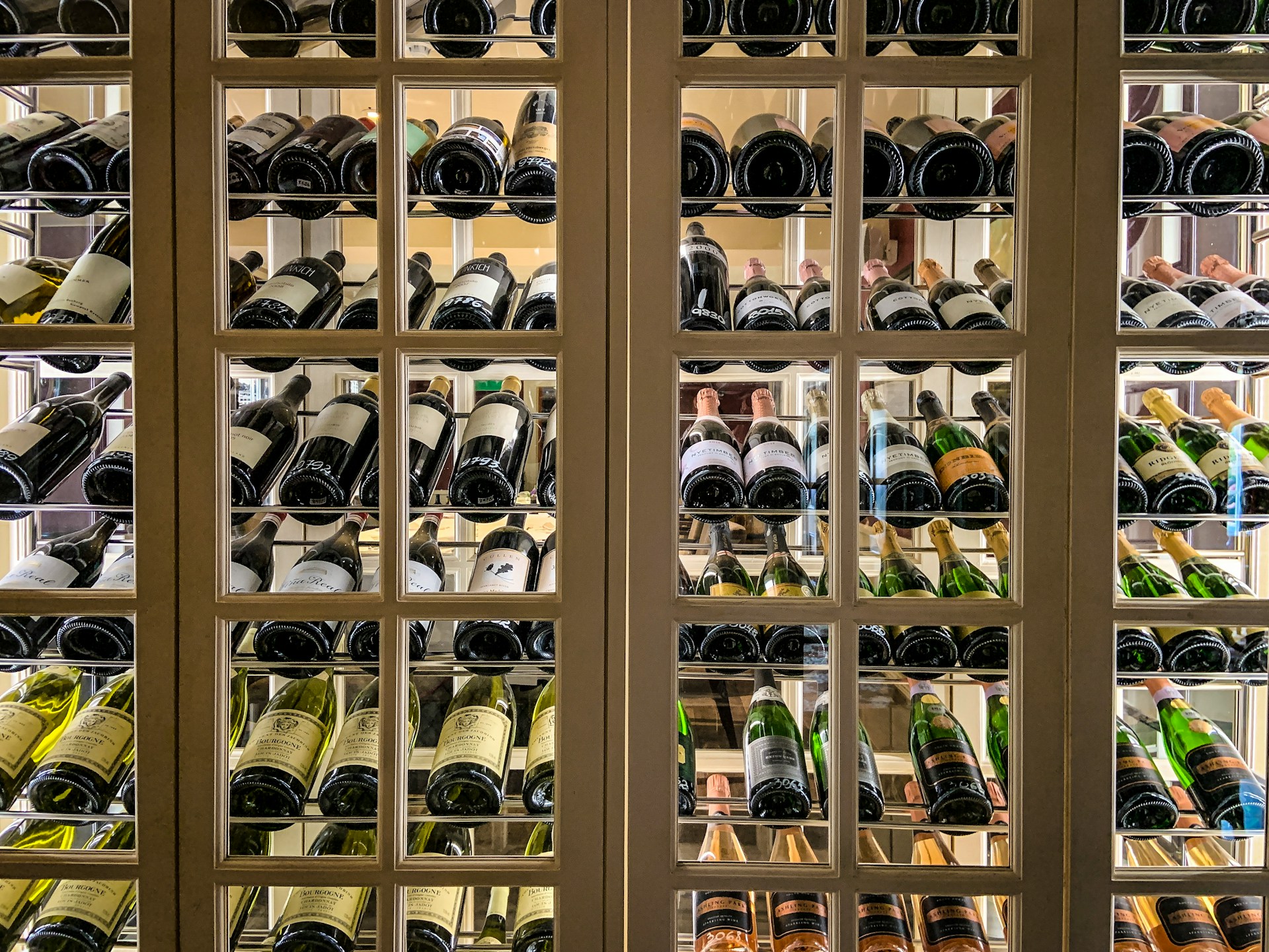
We updated flooring, trim, paint, and lighting in the surrounding basement, but the real work happened behind that wall — transforming raw crawl space into a fully climate-controlled wine cellar that now holds about 1,200 bottles.
And yes, there’s some serious wine in there.
-
Domaine Serene selections around $150–$450 per bottle
-
Opus One around $350
-
A special Domaine Serene “23” release tied to Michael Jordan, about $250
-
Sparkling wines (not technically champagne) in the $150 range
The collection itself represents a significant investment — which makes proper storage not just nice, but necessary.
Why Homeowners Are Adding Wine Cellars
Wine cellars aren’t just for sprawling estates or private vineyards anymore.
We’re seeing more and more homeowners add compact, modern wine rooms — not to show off, but to:
-
Store wine properly
-
Protect long-term value
-
Create a unique feature in their home
-
Add a personal retreat space
Wine loves stability. Ideally:
-
Temperature: around 55°F
-
Humidity: around 60%
-
Low light exposure
-
No vibration
It varies slightly between reds and whites, but the big theme is consistency.
Think of a wine cellar as skincare for your bottles. It keeps them young, fresh, and happy.
The Engineering Is the Real Magic
Design is the fun part. The racks, the glass doors, the lighting — that’s what everyone sees.
But the real magic is behind the walls.
At Armada, we always start with the technical side first. If the system doesn’t work properly, you just end up with a beautiful closet full of warm wine.
A proper wine cellar requires:
-
Dedicated cooling system (not your home HVAC)
-
Proper insulation and vapor barriers
-
LED lighting only (UV light is the enemy)
-
Moisture-resistant materials like stone, metal, or hardwood racks
-
Controlled ventilation
You can’t just tap into your house HVAC system and hope for the best. Wine rooms operate differently — they maintain a specific temperature and humidity range that standard systems aren’t designed to support.
We calculate temperature load, confirm insulation levels, and ensure the envelope is tight before we start talking about aesthetics.
Function first. Then make it beautiful.
Smart Wine Management: The 3D App System
One of the coolest features in this particular project is the client’s 3D wine management system.
They use an app that mirrors their exact wine cellar layout. Once bottles are entered into the system, they can:
-
Search by name
-
View winery details
-
Track cost
-
Locate exactly where a bottle sits
-
Highlight its location visually in the cellar
Yes — you have to input the information manually at first. You tell the app where each bottle lives.
But once it’s there, you can search “Where’s my Opus?” and it’ll light up the exact rack location.
For larger collections, it’s a game changer.
How Big Should Your Wine Cellar Be?
This is the first question we ask:
How many bottles do you want to store?
Most people are surprised by how little space is actually required.
-
25 sq ft (about 5′ x 5′)
Roughly 500 bottles -
50 sq ft (small walk-in closet)
Around 1,000 bottles -
100 sq ft
1,500+ bottles
You don’t need a dungeon or a massive basement.
But here’s the catch:
The larger the cellar, the more precise the climate control needs to be. Otherwise, you’re effectively cooling half your house just to store wine.
Where Should a Wine Cellar Go?
Basements are ideal — naturally cooler and structurally suited to handle weight.
But they’re not the only option.
We’ve seen successful wine cellars in:
-
Under-stair spaces (very popular)
-
Converted pantries
-
Hall closets
-
Spare rooms
-
Insulated garage sections
Even upstairs installations are possible — but there’s a structural consideration most people forget:
Wine is heavy.
A full rack can weigh hundreds of pounds. Before building upstairs, we verify floor load capacity to ensure the framing can handle it.
And if it’s in the garage? Just make sure your Cabernet isn’t sitting next to the lawnmower.
The Investment Conversation
Let’s be honest.
A wine cellar is an investment — in construction and in what goes inside it.
It’s like building a luxury garage… and then filling it with two or three supercars.
Sometimes what’s inside is worth more than the room itself.
So the question becomes:
Does it add value to your home?
Technically, not always dollar-for-dollar.
Emotionally? Absolutely.
A well-designed wine room is memorable. Buyers walk through and say, “Oh, remember the house with the wine cellar?”
It becomes a defining feature. A conversation starter. A detail that separates your home from others on the market.
And if you’re not selling?
It’s your personal retreat. A glass of wine. Good music. A space that feels intentional and distinctly yours.
Turning Unused Space Into Something Special
What makes this Bellevue project especially rewarding is where it started.
An awkward crawl space with dirt floors became a fully engineered, beautifully finished wine cellar holding over 1,200 bottles.
That’s the real takeaway.
Sometimes the most exciting spaces in your home are hiding behind unfinished walls.
If you’ve got a crawl space, basement corner, under-stair void, or awkward nook — it might not be a wine cellar for you. It could be a media room. A sauna. A gym. A speakeasy-style lounge.
But with the right design and engineering, it can become something intentional instead of forgotten.
If you’re in the greater Seattle area and thinking about adding a wine cellar — or transforming unused space into something meaningful — we’d love to talk.
And I’m curious:
What’s your favorite wine?
What’s the most memorable bottle you’ve ever had?
What’s the coolest wine story you’ve got?
Drop it in the comments. Let’s hear it.